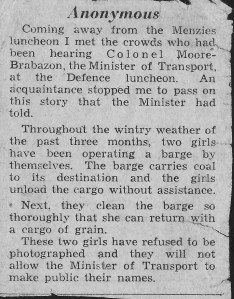
The two ‘girls’ were Daphne March and Molly Traill. The following is Molly Traill’s account of that time:
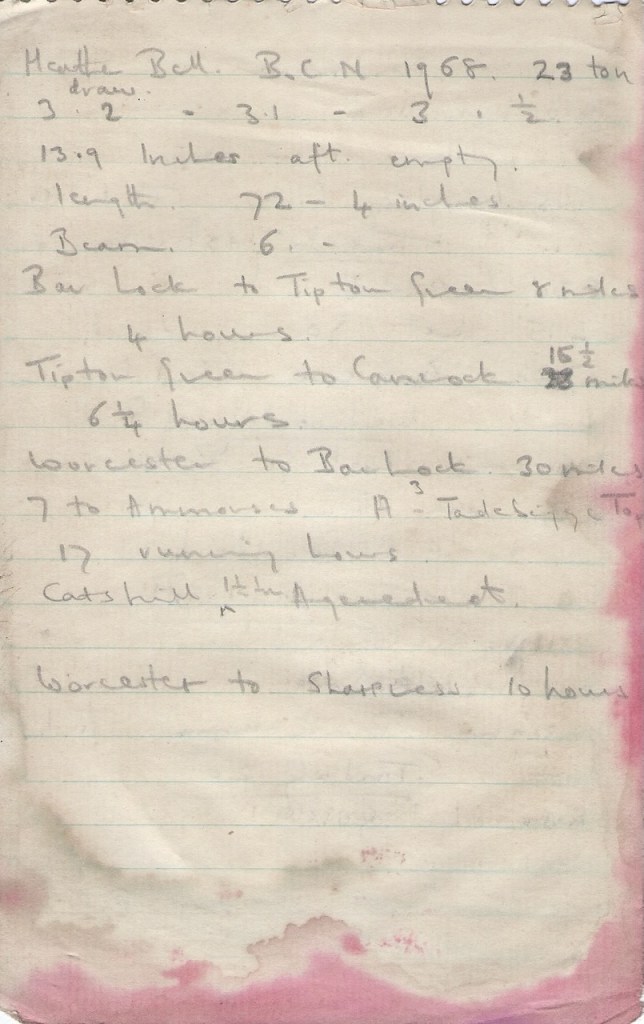
“Heather Bell carried 23 tons and drew 3ft 2ins.
Her weekly round trip was from Townshend’s Mills, Worcester
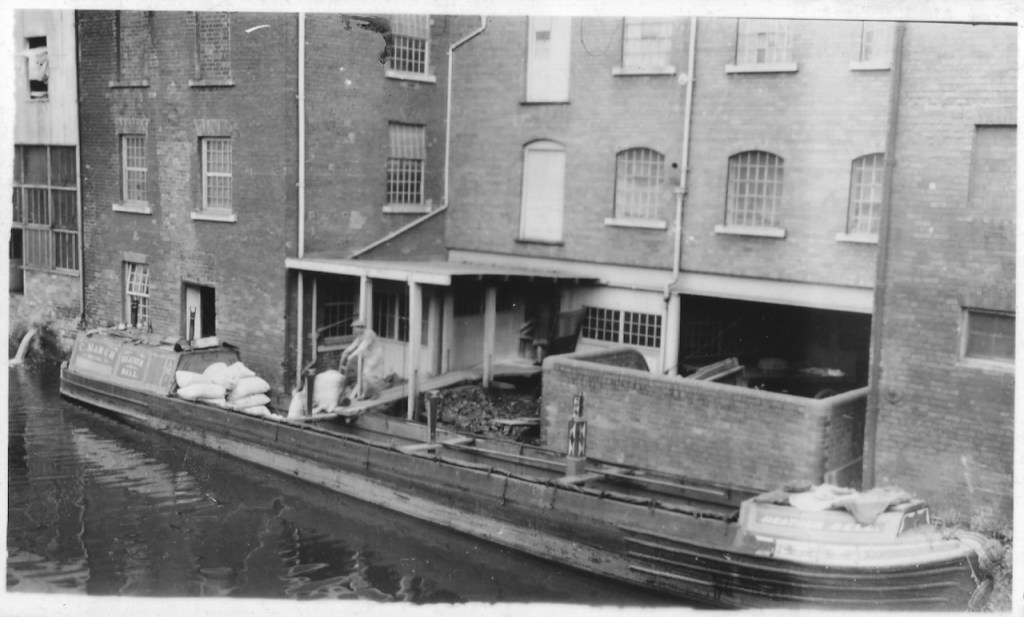
into the Severn via Tewkesbury, passing the branch of the Lower Avon Navigation to Gloucester, into the Berkeley Ship Canal through the Framlode Lock passing the branch of the Stroudwater Canal, to Sharpness Docks. There we loaded grain direct from the ships. Clothed up and back to Townshend’s. Unloaded. Loaded flour. Clothed up. Left Worcester for Birmingham via the Worcester-Birmingham Canal. This is the cut of the famous ‘thirty and twelve’ locks. There are a total of 58 locks in 16 miles from the River Severn at Worcester to the 420 ft level at Tardebigge.
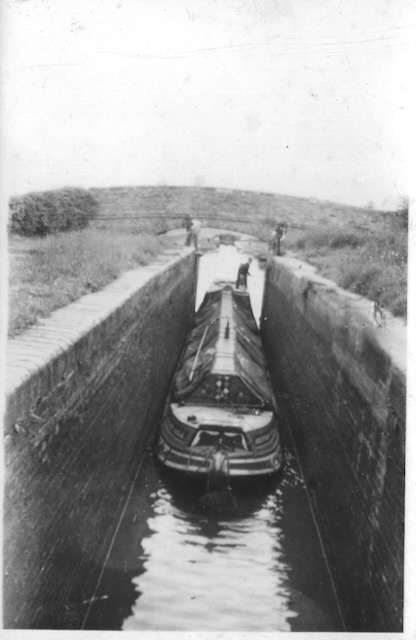
Heather Bell in all her glory in Tardebigge Summit Lock. She is clothed up, the tie ropes are blancoed and the spare end curled in a spiral. The long shaft is tucked handily under for winding round in the basin. Painted in the traditional manner by Mr. Nurser of Braunston, she has roses, cornflowers, daisies, anchors, diamonds and hearts on cabin slides and side and on the cratch board and stands. And in the cabin on the doors and walls the castle picture with its turrets, red roofs, water and boats. There are brass bands round the chimneys and brass rods above and around the cooking range. Her tippits and ramshead decorated with turkshead knots are also blancoed, and on the cabin top is the rose covered 4 gallon can which carried our only water supply.
Here at the Summit Lock is the deepest narrow canal lock in England, it has a fall of 14ft. Besides this feat of ‘locking up’ we had to get through five tunnels before reaching Birmingham: Dunhampstead 230yds, Tardebigge 580yds, Shortwood 613yds, Wast Hill 2726yds and Edgbaston 105yds. We carried a ship’s copper oil lamp on the bows. Showers of water came through the roof in unexpected places. Often the tunnels were full of smoke, if other boats were passing in it or a tug had been through pulling a string of we used to meet L.T.C. Rolt when he was tied up at the middle lock basin of the Tardebigge flight. On his motor boat Cressy he was writing ‘Narrow Boat’.
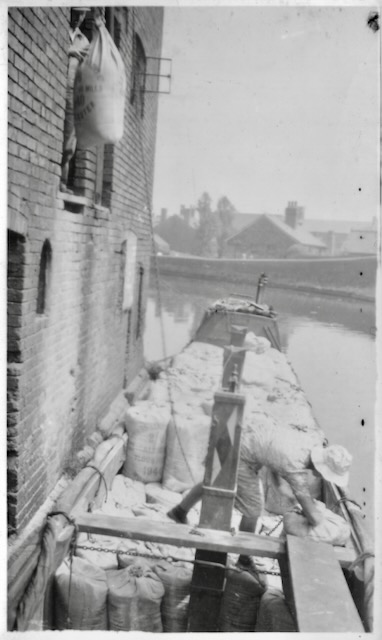
At King’s Norton the Heather Bell branched left for Birmingham, leaving the Stratford Canal on the right and made our way through filthy water to Tipton Green. If the weather was fine one of us would steer while the other unclothed ready for unloading.
It was in this stretch that we experienced one of our worst air raids in the war. Being balanced on water when buildings tumbled gave you a carefree sense of safety.
Gas Street was one of our favourite tie-ups. The 15 miles to Cannock in Staffordshire was full of snags. Motor tyres, wire and dead cats wound themselves round the prop, and stopped the engine. Once we had to borrow a pair of industrial shears from a wire factory to cut off the yards of heavy stuff that had come from their own works, and this standing in mud up to our thighs, and water to our armpits. The canal had not been dredged for sixty years, and it was the passage of the boats that kept the channel clear.
Heather Bell had a Petter engine which, once it started, never stopped except in cases such as this. It was a ‘cold’ starter, that is you heated a nipple on the top of the cylinder with a blow lamp, and then swung by hand a vast brass and steel flywheel. If you put your strength into it at the wrong moment it would go in reverse and you had to begin all over again. The base of the flywheel was an inch clear of the bilges. Heather Bell leaked and had to be pumped out frequently. If you failed to do this, on starting the engine the wheel picked up the greasy coal water and sprayed it all over you and the engine room.
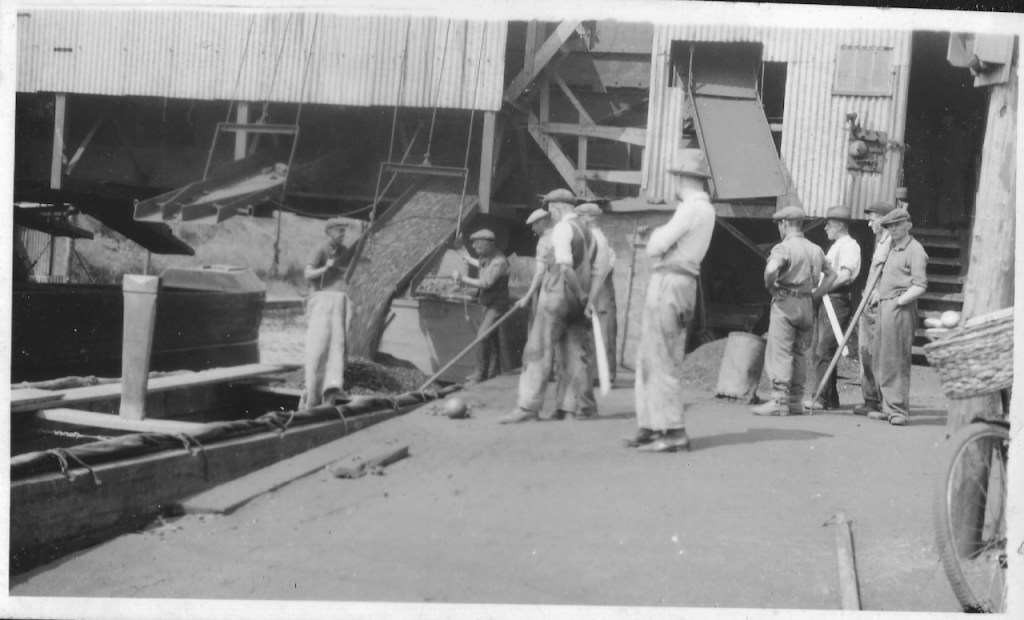
At Cannock we loaded ‘peas’, a very fine coal that was essential for the type of furnaces at Townshend’s. This was dropped direct from a chute at the mines. Curiously enough it was in the pools here that we used to wash our hair, the water was glass clear and mirrored the coal lumps in the bottom. We saved up for some of our finest meals, there was plenty of fuel at hand and, as long as we were on the Sharpness run, Seaman’s Ration Books were issued to us as it was the tidal waters. I believe we were the only two women in the country to have them.
The return journey of 63.5 miles took two and a half days and part of those two nights.”
From account given by Molly Traill to E.V. Wakelin in January 1965. He was the owner of Heather Bell at the time. A small part of the text on this page was summarised as part of an article he wrote about Heather Bell, published in Hospital News, Vol.7 No.1, March 1965 – Northern Ireland Hospitals Authority. However the majority of this text has not been published until now.
Reproduced below are the notes she made at the time about these trips:
For a first hand account of the trips see Molly’s Letters Home page.
On six pieces of paper there are various parts and versions of a poem that Molly wrote about Heather Bell. I reproduce them here, but it needs a poet to put them together into a coherent whole. And, I’m sorry to say, it is not a particularly good poem – I can see why she abandoned it!
Our boat was ‘Heather Bell’
As it should was built of wood
With roses everywhere‘Heather Bell’ she was named
And girls we trained
To carry bombs and butterThe girls we trained
And girls were lamed
Leaping from boat to lockThat name renowned in fullest view!
Willy Nurser we loved and knew
As wartime boatersThrough tunnels dripping dank
‘Footing’ on a plank
And the puttering of the DieselWe fell into the “bloody cut”
Simply told “you are a mutt”
Surfaced clutching treasured dockHow good it was to reach our dock
To wash our clothes and hair
And sluice down in the ‘bare’Tarpaulin sheeted
And carefully treated
Ropes coiled and blancoed whiteOur cargo was our wandering child
From Limehouse to the West
But London was the best‘Heather Bell’ our boat was named
When last we saw – How she was maimed
No roses anymoreBut she had come to Stratford
From a far and Irish shore
Loved and cherished as before
And brought there in a tanker!
The last two verses refer to a chance meeting that Molly had with the owners [from Northern Ireland] in 1964 in Stratford, presumably at a boat rally.
Website by Crispin Partridge – Grandson of Molly Traill.


 Molly Traill Archive
Leave a reply to cpnorfolk Cancel reply